

Our Approach
At HMG, we understand that delivering exceptional healthcare carries an environmental footprint. From the electricity required to power advanced diagnostic and surgical equipment, to the water consumed in sterilization processes, and the waste generated through routine hospital operations, every aspect of care delivery has an impact. As a responsible healthcare provider, we have embedded environmental sustainability into our operational model, ensuring that our commitment to patient wellbeing goes hand in hand with our responsibility to protect the environment.
Our approach is guided by a clear and structured strategy built around three core priorities: increasing energy efficiency, conserving water and reducing waste. These pillars are integrated into the day-to-day management of our facilities and reflected in the design and operation of our infrastructure. We do not treat sustainability as an add-on, it is a fundamental part of how we plan, operate and grow.
To ensure accountability and continuous improvement, we track and report our performance against environmental targets on a quarterly basis. This includes detailed monitoring of electricity consumption, water usage and waste generation across all hospitals. Regular reporting to Senior Management enables data-informed decision-making, facilitates timely interventions and drives ongoing enhancements to our sustainability performance.
These efforts have already delivered tangible results. HMG is proud to be the first private healthcare provider in the MENA region to achieve LEED O&M Gold Certification across all our hospitals. This achievement reflects our unwavering commitment to building and operating high-performing, sustainable healthcare facilities that meet both national aspirations and international best practices.
Our Integrated Building Management System
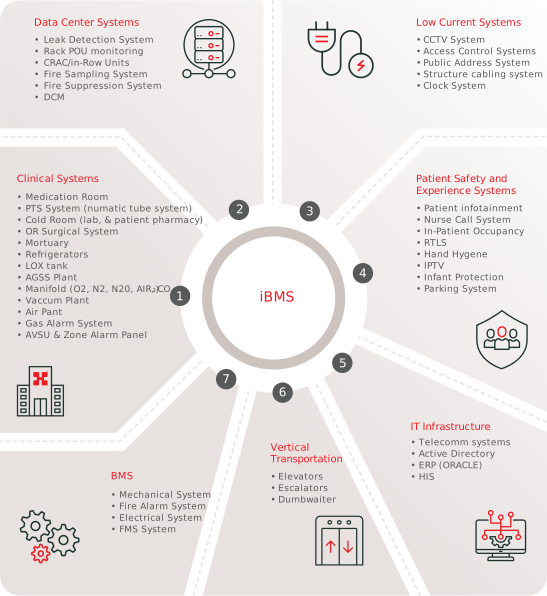
Building on our commitment to environmental stewardship and operational excellence, our integrated Building Management System (iBMS) remains a cornerstone of our sustainable approach. In 2024, our iBMS has been further enhanced to integrate and control over 80 critical systems - spanning heating, ventilation, air conditioning (HVAC), lighting, security, fire safety and energy management - into one unified, centralized platform.
Leveraging advanced IoT sensors, AI-driven analytics and automated control mechanisms, the upgraded iBMS now provides real-time diagnostics and predictive insights. This proactive monitoring enables us to address potential issues before they escalate, optimizing energy consumption and reducing equipment downtime. Seamlessly aligned with our state-of-the-art command center at Al Sahafa Hospital, our iBMS not only reinforces our resource optimization efforts but also deepens our commitment to minimizing the environmental footprint of our operations.

ISO 41001:2018
Facility Management
HMG was the first private healthcare provider in the Kingdom to achieve this certification.
ISO 14001:2015
Environmental Management
ISO 14001 certification mandates the adoption of sustainable practices that protect the environment and minimize the ecological impact of hospital activities.
Climate Change Impact and Energy Efficiency
Climate change isn’t a distant issue, it affects our patients every day. Rising temperatures contribute to heat-related illnesses, air pollution exacerbates respiratory conditions and extreme weather events threaten the healthcare infrastructure. As a leader in the industry, HMG is committed to reducing emissions and building climate resilience into our operations.
Climate Change and Emissions
HMG is committed to reducing its emissions in alignment with global climate goals. Our ESG strategic framework is guided by international frameworks and national initiatives, ensuring a structured approach to minimizing our environmental impact.
In 2024, we took a major step forward by setting emissions reduction targets aligned with Science Based Targets initiative (SBTi), using 2022 as our baseline year. We also initiated a sixmonth feasibility study, introducing four different kinds of hybrid sedan vehicles to our fleet to test the potential fuel consumption efficiencies. Once the feasibility study is complete, pending results, we will draft an official vehicle policy mandating hybrid sedan procurement before expanding the pilot study to other vehicle classes such as vans, buses and large SUVs.
While solar energy integration faced constraints in existing facilities, we are incorporating renewable energy solutions into future hospital designs to ensure long-term sustainability.
Our Approach to Climate Change
HMG is focused on reducing emissions across all scopes and has set ambitious targets to achieve this. By 2030, we aim to reduce Scope 1 and Scope 2 emissions by 70% and 20% respectively. Additionally, we have committed to developing a comprehensive decarbonization plan by 2025, which will help decarbonize our operations and ensure the achievement of our ambitions. To support these goals, we continue to invest in energy-efficient technologies, optimize operational processes and leverage sustainable solutions across our facilities and supply chain. Supported by the data available through our iBMS and CAFM systems, HMG executes several emissions reduction initiatives in accordance with our emissions reduction plan.
To reduce employee transport emissions, the Group offers company transport options for physicians and nurses. We are pleased that once again 32% of our employees used company transportation in 2024, up from 27% in 2022.
Performance
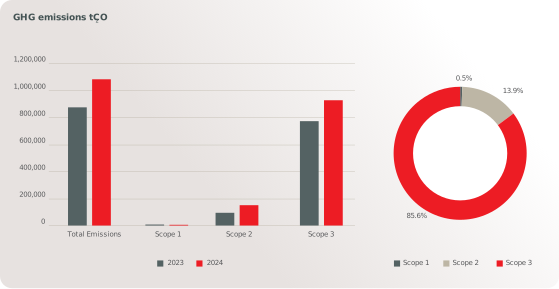
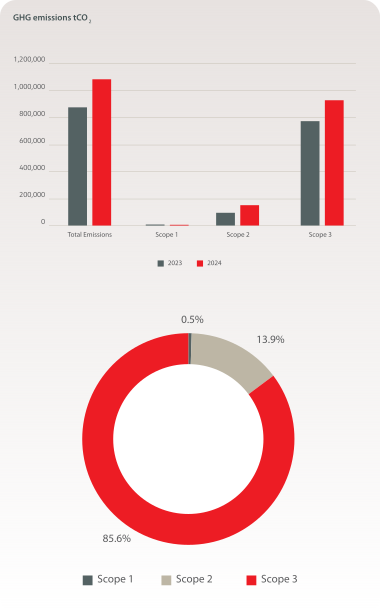
In 2024, HMG recorded a 24% increase in emissions, primarily driven by the expansion of our operational footprint through the addition of new facilities. However, our emissions intensity remained stable at 0.14 tCO₂ per patient, demonstrating that despite our growth, we continue to deliver care efficiently and sustainably. This consistency in emissions intensity, even amid increased capacity, underscores our ongoing commitment to environmentally responsible healthcare delivery and reflects the effectiveness of our sustainability measures across an expanding network.
Conserving Energy
The Group currently sources 100% of its electricity from the national energy grid. As our operations expanded with three new hospitals added to our portfolio, energy consumption naturally increased. However, rather than merely offsetting this growth, we pursued deeper efficiencies by reducing Scope 1 emissions through strategic energy management initiatives. These include energy-efficient LED lighting, AI-driven smart building systems and automated energy management during low-usage periods. To top-up our initiatives that are focused on conserving energy we ensure proper preventive maintenance practices across all our facilities.
Performance
In 2024, HMG experienced a 66% increase in total energy consumption, rising from 167.6 million kilowatt-hours in 2023 to approximately 278.4 million kilowatt-hours. This increase was primarily driven by the expansion of our medical facilities, where energy usage nearly doubled from 149.3 million to 272.4 million kilowatt-hours. Meanwhile, energy consumption at non-medical sites value for 2024 excludes employee housing as we are currently restructuring how the data is reported specifically for employee housing and will restate the amounts in 2025 once the data is cleansed and normalized to ensure accuracy and consistency.
Sustainable Waste Management
Waste is an unavoidable byproduct of healthcare, but how we manage it defines our environmental impact. From office paper to hazardous medical waste, HMG takes a proactive approach to waste minimization, recycling and responsible disposal.
Our Hospital Waste Management Plan outlines policies for:
Segregating medical waste at the source using specialized containers and labeling.
Recycling non-hazardous waste through the HMG Go Green program, which includes waste segregation bins in offices, waiting areas and nursing stations.
Eliminating single-use plastics by transitioning to reusable cafeteria utensils.
Digitizing operations, including patient record keeping, ensuring that our hospitals remain paperless since 2022.
Performance
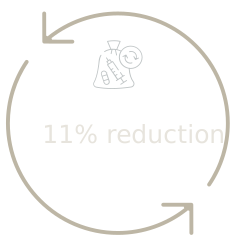
In 2024, HMG maintained a waste diversion rate of 12%, consistent with the previous year, reflecting the continued impact of our recycling initiatives and partnerships with specialized waste management providers. Notably, the proportion of medical waste decreased by 21.4%, from 28% in 2023 to 22% of total waste in 2024, highlighting the effectiveness of our targeted waste strategies such as improved segregation, staff training and process optimization. While total waste generation increased by 32.7%, driven by expanded operations and patient volumes, our efforts helped to reduce the relative share of hazardous waste, demonstrating a commitment to more sustainable waste handling practices.
33.2% increase in waste diverted from landfill between 2023 (617 tons) and 2024 (821 tons)
Efficient Water Use
Water is a lifeline in healthcare, used for sanitation, sterilization and maintaining hygienic environments. However, its long-term availability depends on responsible management today. Recognizing this, HMG has implemented a multi-layered water efficiency strategy that balances sustainability with the highest standards of patient care.
Implementing Water-Saving Measures Across Our Footprint
In 2024, we advanced our water conservation efforts through several key initiatives, such as installing water sub-systems across all hospitals, prioritizing cooling towers and non-potable water sources to optimize consumption, as well as launching realtime water monitoring and sensor-based fixtures to detect and eliminate inefficiencies. We also expanded our condensation water treatment project to our new Al Fayhaa Hospital in Jeddah. New hospitals in regions with high humidity levels will include this technology.
We also conducted monthly plumbing inspections to identify leaks and inefficiencies, preventing unnecessary water waste. Furthermore, we educated employees through training and awareness programs, ensuring that conservation is embedded into daily operations.
Performance
In 2024, HMG achieved a 29.1% reduction in total water consumption, bringing usage down to 470,266.74 m³, compared to 663,178 m³ in 2023. This significant decrease was largely driven by a 78.3% drop in water use at non-medical sites, reflecting the impact of targeted conservation measures and operational efficiencies. Water intensity per patient also saw a marked 40% improvement, falling to 0.06 m3/patient, underscoring our continued commitment to resource efficiency. These outcomes highlight the effectiveness of our conservation initiatives and infrastructure planning in reducing environmental impact while maintaining high standards of service delivery.

Dr. Sulaiman Al Habib Medical Services Group Company
Investor Relations Department King Fahad Road, Olaya District P.O. Box: 301578, Riyadh 11372, Kingdom of Saudi Arabia
Business Tel: + 966 (11) 5259999, Ex. 4919
Fax: +966 (11) 4620096
Email: investor.relations@drsulaimanalhabib.com